


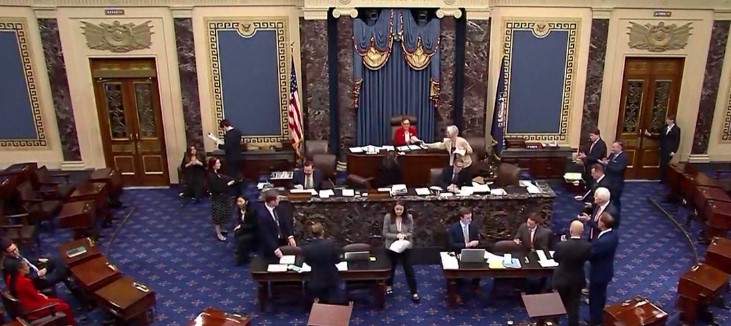
Newsman: The Senate voted 86 to 11 to pass the sweeping Russia sanctions bill on Friday, advancing legislation that would give the White House more leverage against Moscow as it seeks to end the war in Ukraine — and a brand new tariff tool. The new iteration of the bill includes broad authority for the president to waive any sanctions that are applied, as long as the White House provides a written certification that the waiver is “in the national interests of the United States” and a report outlining the basis for the certification.
Now that the bill has cleared the upper chamber, it’s up to lawmakers in the House to determine its fate when they return in September. President Donald Trump has already signaled he would sign the bill if it lands on his desk.
The bill, which championed by the late Sen. Lindsey Graham and cosponsors including Sen. Richard Blumenthal (D-Conn.) have worked to advance for more than a year, would issue mandatory sanctions not only on Russia’s leadership and energy sector, but also on abetters of Russia’s defense industry and so-called shadow fleet in an effort to curb the flow of cash to Moscow’s war chest.
Ukraine’s supporters on the Hill and officials in Kyiv have been urging its passage, arguing that it would deal a timely blow to Russia’s war efforts as Kyiv seeks to capitalize on a series of recent favorable turns in the war to end it altogether.
In comments on the Senate floor ahead of the vote, ranking member of the Senate Foreign Relations Committee and vocal backer of the bill Sen. Jeanne Shaheen (D-N.H.) stressed the “urgency” of the moment.
“The momentum is on Ukraine’s side,” Shaheen said. “Now is the time to put more pressure on Putin.” She added that the situation on the ground could turn back in Moscow’s favor within months — especially with assistance from foreign foes like China.
It has already been a long road for the sanctions measure, which Graham and Blumenthal first introduced in April 2025. The lawmakers negotiated for months with the White House, which wanted more control over what entities it could sanction, and by how much. In July, Graham announced — from Kyiv — that the White House had agreed to a revised version of the bill.
Following a last-minute demand from Trump, lawmakers also added language to the bill to extend certain sanctions on Iran.
Graham’s sudden death just days after winning Trump’s green light spurred his fellow senators to support the legislation, which cleared a procedural hurdle at the end of the month by a wide margin.
But a provision in the bill that would grant the White House authority to issue 100 percent tariffs on top buyers of Russian oil, and countries facilitating sanctions evasion, nearly derailed the measure’s passage in the upper chamber before lawmakers left town for August recess.
An amendment pushed by Sens. Rand Paul (R-Ky.) and Ron Wyden (D-Ore.) that would have stripped the tariff language from the bill entirely failed in a 64 to 32 floor vote Friday.
Still, nearly one-third of the upper chamber voted in favor of striking the tariff language, highlighting Democrats’ worries about handing more tariff powers to a White House already eager to use that tool against Washington’s global allies and enemies. That Democratic discontent is likely a foreshadowing of a similar sticking point for lawmakers on the House side when they return from recess in September.
As Senate leadership tried to reach an agreement to fast-track consideration of the bill before the chamber adjourned for the summer, lawmakers opposed to the tariff provisions threatened to derail that effort over squabbles about what amendments should get a floor vote.
One of those amendments was an effort from Sens. Raphael Warnock (D-Ga.) and Bill Cassidy (R-La.), to add language curbing the tariff powers afforded to Trump in the bill. Warnock — who voted to advance the bill in July — had threatened to thwart Senate leadership’s effort to fast-track consideration of the legislation this week if his amendment didn’t get a floor vote.
But Warnock pulled the amendment at the eleventh hour Thursday evening after securing the Trump administration’s commitment to enact a clear off-ramp for countries hit with tariffs, according to a person familiar with the senator’s plans granted anonymity to speak about internal conversations.
That move may not go far enough to quell the concerns of Democrats in the House — some of whom have already expressed frustration over the provision.
House Foreign Affairs ranking member Gregory Meeks (D-N.Y.) and Rep. Don Beyer (D-Va.) issued a joint statement following the Senate vote slamming the current bill text as “unacceptable” and citing the broad waiver authority and tariff powers granted to the White House.
But the lawmakers vowed to “continue to seek a path forward that remedies this bill’s flaws.”

