


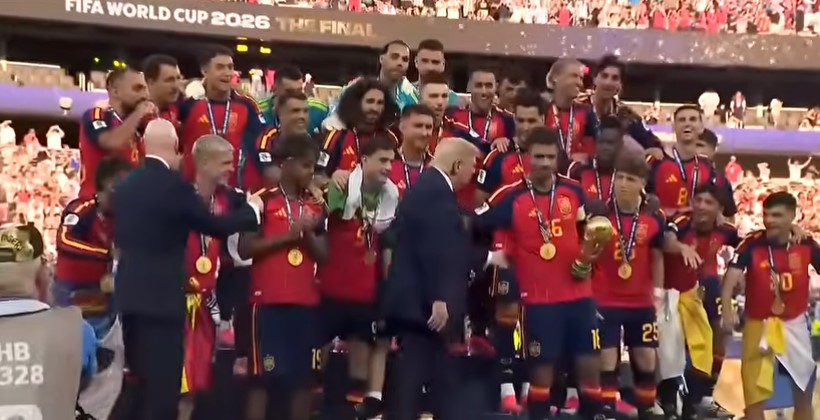
Newsman: Spain has won the FIFA World Cup with a 1-0 extra-time win over Argentina. It is the Spanish men’s team’s second World Cup title, after winning their first in 2010. And for this squad, the win marked the 38th consecutive match without a loss, a run that includes their trophy in the 2024 European Championship.
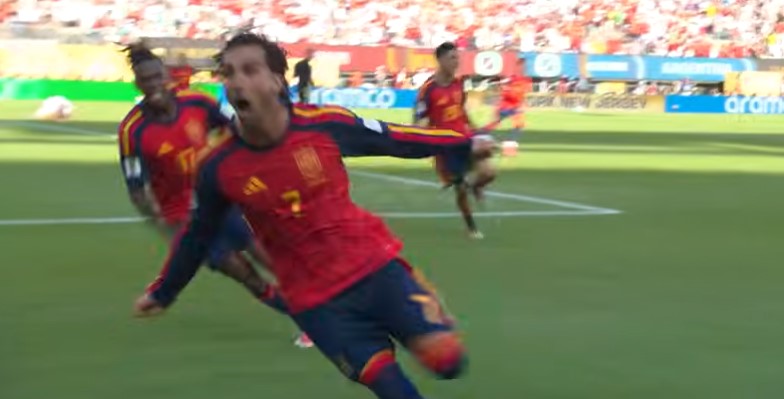
Ferran Torres scored the winning goal in the 106th minute. It was his first goal of the 2026 tournament and third World Cup goal overall. Argentina superstar Lionel Messi was completely nonexistence all through the game except once he received the ball and tried to move.
Spain is the most dominant defensive team to win a World Cup; no champion before them had ever conceded only one goal en route to a title. And this Spain team did so with an extra game, as the new, expanded format of the tournament required its champion to play eight matches, a record.
Spain dominated possession all through the championship final and its defense shut out Argentina almost completely — Argentina recorded zero shots and only two touches in Spain’s box through halftime of extra time. Leonardo messi Yet for the 90 minutes of regulation, Argentina’s defense held firm, with Spain’s crosses and attempts broken up by an Argentine shin or cleat or head, and goalkeeper Emiliano Martínez seemingly always in position to stop any shots that got through. (Martínez finished the game with 11 saves, the most ever recorded in a men’s World Cup final.)
Then, in stoppage time came the pivotal moment, when a tackle by Argentine midfielder Enzo Fernández on Spain’s young star Pau Cubarsí flipped the young defender into the air and hard onto the ground. That earned Fernández his second yellow card of the game, after he received his first for dissent when he publicly disagreed with the referee.
The two yellows combined for a red card, sending Fernández off the field and forcing Argentina to play the 30 minutes of extra time with only ten men.
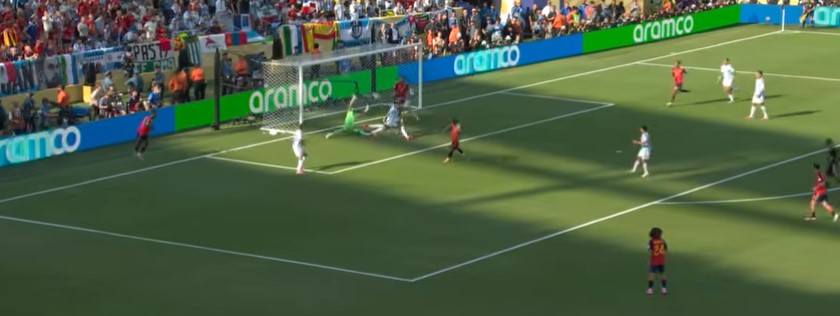
After recording nearly a dozen shots on target, Spain finally broke through when forward Nico Williams took a cross into the box off his head, sending it back into the empty space in front of his teammate Ferran Torres, who knocked it in for the game’s only goal.
On Sunday, Argentina’s magic ran out as it attempted to become just the third country to win back-to-back men’s World Cup titles. “It really hurts in our soul not being able to take the trophy with us,” said Argentina coach Lionel Scaloni after the match.
Spain’s run to the title came through a wall of top-ten opponents: first a 1-0 win over No. 5 Portugal, then a 2-1 quarterfinal win over No. 9 Belgium, then a 2-0 win in the semifinal over No. 3 France, whose attack had looked unstoppable until then. Argentina had been the world’s No. 1 team; with the win, Spain has moved into the top spot.
Argentina’s Lionel Messi’s performance in this World Cup had been nothing short of unbelievable: His eight goals and four assists — including assists on both crucial late-game goals in the heart-stopping semifinal against England — was second only to France’s Kylian Mbappé in the race for the Golden Boot award. (Mbappé scored twice in Saturday’s bronze medal loss to England and finished the World Cup with 10 goals. He is now the all-time World Cup scoring leader with 22 goals)
With the victory, Spain’s football program extended its global dominance. The Spanish women are ranked number 1 and are the defending Women’s World Cup champions. This is the first time a country has held both titles simultaneously.
At MetLife Stadium, where the get-in price for the game had reached five figures in the days leading up to the final, a crowd of 80,663 piled into the stands to watch the final. And they were treated to a World Cup first: a halftime show that lasted around 12 minutes, featuring Shakira, Burna Boy, BTS, Justin Bieber and Madonna.
The halftime show was a nod to American audiences and halftime spectacles like the Super Bowl, but it was controversial to many soccer fans: traditionally, halftime is 15 minutes. This one — between setup and music performances — lasted around 25 minutes. Sports fans have complained that it slows down the natural rhythm of the game; the more severe traditionalists say it’s part of the trend to Americanize the game (along with hydration breaks, which effectively create four quarters, similarly to an NFL or NBA game.)
The final day of a summer of World Cup fever in North America, the last of 104 matches in total, was a hot and sunny July day in East Rutherford, New Jersey, just across the Hudson River in Manhattan. On Sunday morning, fans — some in Messi jerseys and others draped in Spain flags — stood in line for bagels, sang on the subway and trains to the stadium, and packed into bars and watch parties, including a crowd of about 50,000 in Central Park.
Sunday in Met life stadium in New Jersey, it was only the winning side crowned on the final day of the month-long competition, but there were several other awards that were given out. Spain had a solid day, nearly sweeping the individual trophies along with their second World Cup title.
Golden Boot (most goals in the tournament)
For the first time in men’s or women’s World Cup history, there is a back-to-back Golden Boot winner.
Kylian Mbappé, France – helped along by a two-goal performance in the third-place game against England on Saturday, July 18, was able to edge out Argentina’s Lionel Messi and win the honor of the World Cup’s leading goal scorer, netting 10 goals to Messi’s eight.
The two were neck-and-neck in both goals and assists at eight and four, respectively, heading into the weekend, but an offensive exhibition between England and France that ended in a 6-4 win for England ultimately proved to be the difference.
The Spain goalkeeper won the Golden Glove as the best goalkeeper at the 2026 World Cup on Sunday, July 19, capping a tournament during which he allowed one goal in eight matches and set records that had stood for decades.
La Roja won a World Cup title, its second in team history, $50 million, and championship rings. It also cleaned up in the individual awards, including the FIFA Young Player Award.
To be eligible for this year’s award, a player must have been less than 21 years old at the start of 2026. That made Spain’s Pau Cubarsí (19 years old) the perfect candidate to win. Cubarsi appeared in 8 matches for Spain.
The award is relatively innovative. It was first awarded in 2006 when Germany’s Lukas Podolski won the prize. Podolski was followed by some of the best players in his generation, Thomas Müller, Paul Pogba, Kylian Mbappe and Enzo Fernández.
Spain’s World Cup champions head home for a royal welcome and a parade through Madrid
Spain’s World Cupwinning soccer team is set to return home on Monday, where the 26-man squad will be greeted by Spanish royalty and Prime Minister Pedro Sánchez before boarding an open-top bus for a parade through central Madrid.
Throngs of fans will greet them as they travel from near Moncloa Palace, the prime minister’s official residence, to Cibeles Square.
A ceremony with the players will then be held at the square, where previous Spanish national teams and their supporters have traditionally gathered to celebrate.
Spain walked off with the trophy at Sunday’s final after defeating now-dethroned champion Argentina 1-0 in East Rutherford, New Jersey. It was only the second time — after a 2010 victory in South Africa — that Spain won the title.
The Spanish capital erupted into celebrations after the final whistle, with thousands of supporters pouring into the streets from bars and restaurants, many draped in Spanish flags or wearing the team’s colors.
Crowds packed Madrid’s Puerta de Sol and other major squares — singing, dancing and setting off flares while car horns blared throughout the capital.
Many celebrated Sunday’s victory long into the wee hours of Monday morning.
The World Cup title, combined with the Women’s World Cup won by Spain in 2023, makes the European nation the first to hold both the men’s and women’s titles simultaneously.

