


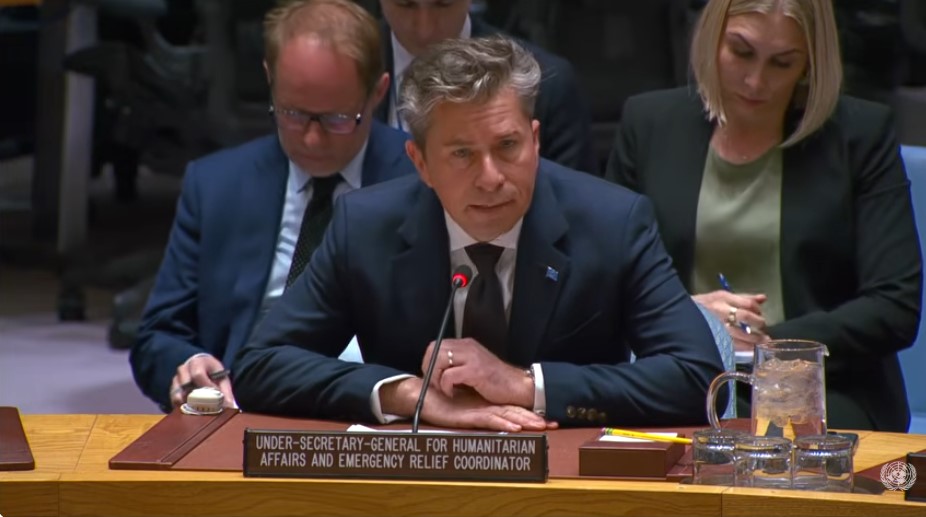
Newsman: The UN under-secretary-general for humanitarian affairs Tom fletcher, urge the UN Security Council to end the ongoing war in Ukraine. Presenting his own warzone experience in Ukraine Mr. Fletcher said, the International Humanitarian Law is increasingly discounted.
“July was the deadliest month for civilians in Ukraine in over four years, with at least 437 killed and more than 2,600 injured”, Tom fletcher said . In the first half of the year, civilian casualties rose 37 per cent compared to last year.
Undersecretary General Fletcher on Monday briefed the UN Security Council on the humanitarian situation in Ukraine. In the Briefing, Undersecretary general urge to defend the international humanitarian law with three urgent measures by the UN security council. First, Civilians and civilian objects must never be targeted. Violations must be credibly investigated, perpetrators held accountable. Impunity cannot be normalized and taking concrete measures that protect humanitarian action, including systems for responding to strikes near convoys, for improved humanitarian notification and for temporary ceasefires for evacuations.
Second, help humanitarians prepare for the tough winter ahead. If energy infrastructure continues to be targeted, we face the prospect of a much worse humanitarian crisis. Do not allow the international discourse on this war to be dominated by an arms race. And work strenuously to get peaceful commerce moving again across the Black Sea.
And the third, we need robust debate with the States and companies driving this lethal military innovation. The onus of compliance remains with those who develop, deploy and use these systems.
“Drone warfare is dismantling civilian life” Undersecretary General Fletcher told the Security Council giving first hand witness.
Describing the devastating impact of this war Fletcher told the Security Council, “Technology is now outpacing accountability. Abandon the rules of war and we all face the chilling reality the Ukrainians face right now. And they need this war to end above all.”
Expressing concerns of danger by modern tech, he said, Drone operators appear to feel detached from their victims and from the law. But neither the weapon nor the distance diminishes the unequivocal obligations under international humanitarian law (IHL), regardless of the weapon or the party, to protect civilians and civilian objects.
“Drones have a persistent humanitarian impact. Civilians live in constant anxiety, knowing drones are being used to track, observe and strike them with little warning,” Fletcher told.
Humanitarian workers face these same dangers and require the same protection.
Between January and July, ten humanitarian workers were killed in Ukraine and almost 40 injured. At least 20 warehouses have been destroyed, erasing millions of dollars in aid. UN convoys have been struck, evacuation vehicles hit while attempting to save civilians.
While humanitarian operations in Ukraine are better supported than other crises, they remain underfunded“ Fletcher told ‘we need a stronger bridge to long-term recovery.’

