


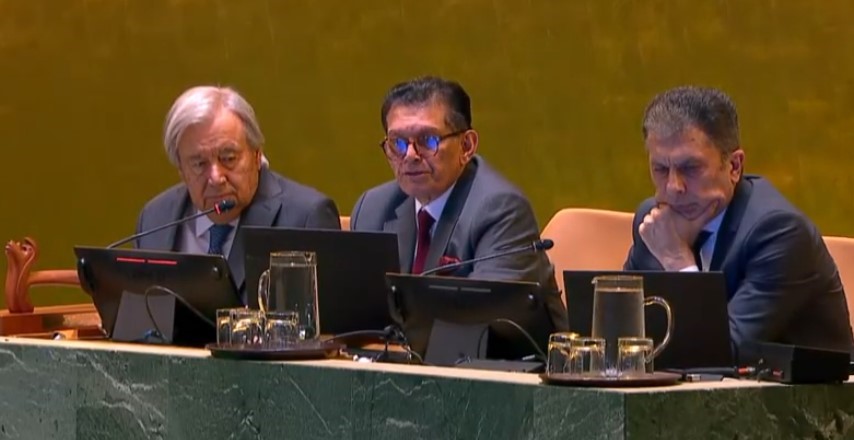
Akm Shehabuddin Kisslu: UN General Assembly’s 81st Session starts today with priorities focused on reform and dialogue at UN headquarters in New York. The theme of this year’s debate is restoring trust and managing transformation to create a United Nations that works for all. One of the most significant tasks for the new session will be the selection of the UN’s next secretary-general.
Antonio Guterres, who has served as UN secretary-general since 2017, is due to leave office on December 31, 2026. The selection process for his successor is therefore expected to be closely watched by UN member states.
Newly elected President of the General Assembly Khalilur Rahman identified strengthening cooperation and dialogue among states as one of the key areas of his work during the opening of the 81st sessions. But issues of ongoing wars, conflicts, peace or international security were not addressed in his remarks.
The UN was operating under unprecedented pressure on the multilateral system;
“I am not so naive as to think that everything can be resolved quickly and peacefully. Some issues will remain unresolved, and finding solutions may take time. That is normal, but it should not deter us from seeking common ground wherever possible” he told.
The UN General Assembly President Rahman outlined the Organization’s main areas of work during his opening remark. The President of the General Assembly paid particular attention to reforming the UN, restoring confidence in the Organization and adapting its work to today’s challenges. He listed strengthening the UN’s financial stability, transparent resource management, greater involvement of civil society, broader representation of small states in decision-making and ensuring gender balance among the priorities of the 81st session.
The New technologies, including artificial intelligence, could open up additional opportunities for the UN, President Rahman said.
UNGA President Rahman also called on member states to pay their contributions to the UN budget in full and on time, without additional conditions. In addition, he promised to focus on the process of electing the Organization’s next secretary-general. Rahman stressed that the procedure should be fair, inclusive and transparent.
The session’s high-level general debate will begin on September 22, with heads of state and government expected to deliver national statements. More than 100 heads of state and 46 heads of government are expected to attend, alongside foreign ministers, ambassadors and other senior representatives.
The General Assembly’s agenda will include several high-level meetings focusing on pressing global issues. These will include a meeting marking the 40th anniversary of the adoption of the Declaration on the Right to Development, discussions on climate action and a just transition, and a session addressing the existential threats posed by rising sea levels.
World leaders will also take part in a high-level meeting on pandemic prevention, preparedness and response.
Another high-level plenary session will focus on the International Day for the Total Elimination of Nuclear Weapons, underscoring continuing international efforts toward nuclear disarmament.
The 81st session will run until September 7, 2027. Its opening month will traditionally be dominated by the high-level general debate, bringing together heads of state and government and foreign ministers from around the world.
The high-level general debate is scheduled for September 22–26 and September 28.

