


Akm Shehabuddin Kisslu : The United Nations said that Earth has lost its chance to prevent some of the worst of global warming’s harms. So now the world must figure out how to get temperatures below the danger zone and back to safety,
“Earth is soon going to exceed the safe temperature threshold agreed upon by the world in the 2015 Paris climate accord because of warming from the burning of coal, oil and gas,” according to report issued on Wednesday by the United Nations Environment Program. The report, a first-of-its-kind
warns of “tipping points” with irreversible and cascading effects, including the loss of the West Antarctic and Greenland ice sheets, the loss of the Amazon rain forest and the shutdown of the Atlantic Ocean circulation system that keeps much of Europe warm.
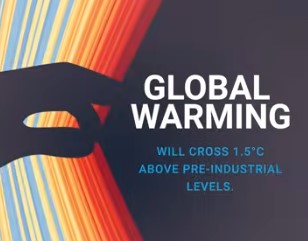
Wednesday’s report admitted that the world will cross the 1.5 threshold “in the next few years.” Despite experts saying there’s no way to limit warming to 1.5 degrees, U.N. officials long maintained the 1.5 window was still open.
“Some locations might become more or less uninsurable or even uninhabitable,” the report said.
United Nations Secretary-General António Guterres said “Humanity is speeding past the limit to avoid climate catastrophe.” UN ordered its climate science arm to study different warming limits after the Paris climate accord. A goal of 1.5 Celsius (2.7 Fahrenheit) above mid-19th century temperatures became generally accepted after the scientists found dramatic impacts that affect people and the planet at 2 degrees Celsius (3.8 degrees Fahrenheit) but not at 1.5 degrees.
Instead of giving up, scientists and U.N. officials recommend trying to limit excessive warming and then bring the temperature back down to the agreed-upon threshold. But it still will mean decades of increased weather-related disasters, rising seas, extinctions and melting ice and glaciers, according to the report.
After a period of over-the-limit warming, the new strategy envisions getting back below the limit by ending fossil fuel use and developing some kind of way to suck industries’ carbon dioxide out of the air.
The world is now at 1.4 C (2.5 F) above pre-industrial levels, some scientists have calculated. The measure is based on a 20-year average, rather than a single year’s temperatures.
The report said the most optimistic scenario has warming peaking at 1.8 C (3.2 F) around mid-century if countries pursue ambitious climate goals, but that governments’ current policies should push temperatures to 2.6 C (4.7 F) above pre-industrial levels by 2100.
Therefore,instead of preventing warming of 1.5 degrees, now the U.N. said it wants policymakers to “prepare for and navigate a future” in which the globe crosses that limit and then corrects course and cools temperatures.
The report envisions that global temperatures will pass 1.5 “within the next few years,” follow a hump-shaped path of more warming, peak, then gradually cool to below the 1.5 mark, ideally by the end of the century. The report and experts call it “overshoot.”
“If we act now we can limit overshoot,” the report said, “Not a safe world but safer than remaining above” 1.5 degrees for the long term.”
During this overshoot period, more people will die or get sick because of the worsening climate change and its extreme weather, the report said. Food production will drop, people will go hungry, water shortages will worsen, economies will be hurt and species like coral will go extinct according to the report said.
The UN Environment Program said the traditional approach of this is planting more trees, but it says planting trees could, at most, shave a tenth of a degree off global temperatures. So the authors said more novel carbon removal approaches will be needed. The last phase in overshoot is cooling the planet by removing carbon dioxide from the air and storing it somewhere.

