


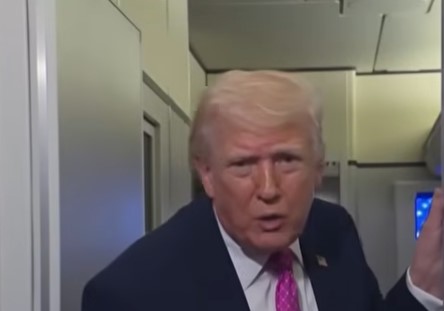
Newsman: President Donald Trump on Monday said the United States is engaged in “serious discussions” with Iranian officials on a deal to end the war, but threatened to launch strikes against Iran’s “Electric Generating Plants, Oil Wells and Kharg Island” a key oil export hub if Iran does not reopen the Strait of Hormuz “immediately.”
President Donald Trump on Monday even suggests “great progress” has been made on negotiations.
In a post to Truth Social on Monday morning, Trump said ,
“Great progress has been made” Trump said on Truth Social, adding that if a deal is not reached shortly and the Strait of Hormuz remains effective closed, the U.S. will “conclude our lovely ‘stay’ in Iran by blowing up and completely obliterating all of their Electric Generating Plants, Oil Wells and Kharg Island (and possibly all desalinization plants!), which we have purposefully not yet ‘touched.’”
Deliberate attacks on desalinization plants, which convert salt water into potable water and are crucial to sustaining life in the region, would be a major escalation that could constitute a war crime under international law.
President Donald Trump said in a post to social media on Monday morning that the U.S. is currently engaged in “serious discussions with A NEW, AND MORE REASONABLE, REGIME to end our Military Operations in Iran,” but threatened to expand U.S. strikes if the negotiations fail.
“This will be in retribution for our many soldiers, and others, that Iran has butchered and killed over the old Regime’s 47 year ‘Reign of Terror,'” Trump added.
The new threats come as Iran stepped up its strikes on Israel and its neighbors across the Middle East, and after thousands of additional U.S. troops arrived in the region over the weekend.
Trump’s latest threats are not the first he has made about civilian infrastructure. Last week, he set a 48-hour deadline to reopen the strait — which nearly 20 percent of the world’s oil is normally transported through — or the U.S. would destroy “various POWER PLANTS, STARTING WITH THE BIGGEST ONE FIRST!” He later kicked back that deadline.
Iran declared the Strait of Hormuz, a vital waterway in the region, effectively closed earlier in the month and has attacked ships that attempted to go through the strait. Trump has repeatedly called on Iranians to reopen the strait as oil prices have surged, sometimes to more than $100 per barrel, leading to skyrocketing gas prices.
Iran has also threatened to target civilian infrastructure, and some in other Arab nations have already been hit. After Trump’s initial threats last week, Iranian parliament speaker Mohammad Bagher Ghalibaf warned that if Iran’s power plants and infrastructure are targeted, Iran would retaliate by targeting vital infrastructure across the region — including energy and desalination facilities in Gulf nations.
In recent days, President Trump has weighed seizing or destroying Kharg Island, a small piece of land that almost all of Iran’s oil exports pass through, which could involve American boots on the ground.
“This will be in retribution for our many soldiers, and others, that Iran has butchered and killed over the old Regime’s 47 year ‘Reign of Terror,’” Trump said Monday.
No American troops have as of yet invaded Iran, though thousands have been deployed in the region amid a continued buildup.
The Arab League on Monday condemned “the reprehensible Iranian attacks on electricity and water desalination facilities in the State of Kuwait.”
Attacks on energy structures could constitute a war crime. United Nations Secretary-General António Guterres previously told ‘POLITICO’ that “If there are attacks either on Iran or from Iran on energy infrastructure, I think that there are reasonable grounds to think that they might constitute a war crime.”
Trump previously extended a deadline for Iran to open the strait, citing “productive” negotiations. Washington and Tehran continue to send conflicting messages about the talks, with Trump saying he expects a deal soon and Iranian officials saying they’ve not had any direct negotiations with the U.S. so far.
More than a month into the war, Iran has maintained its grip on the critical trade route, raising energy prices globally. Thousands have been killed across Iran and Lebanon, where Israel recently vowed to expand its ongoing ground invasion. Dozens have been killed in other Middle Eastern countries, including Israel. Among the dead are 13 U.S. service members.

